
Chemistry of Lipids
1. Lipids: Overview
Definition: Lipids are hydrophobic (water-insoluble) organic compounds composed mainly of carbon, hydrogen, and oxygen, with some containing phosphorus and nitrogen.
Nature: They are amphipathic, having both hydrophilic (polar) and hydrophobic (non-polar) regions.
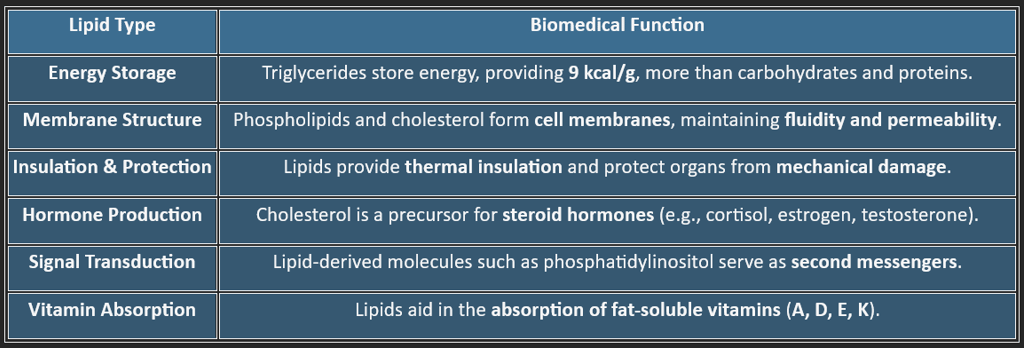
Functions: Lipids play key roles in energy storage, membrane structure, insulation, signaling, and hormone synthesis.
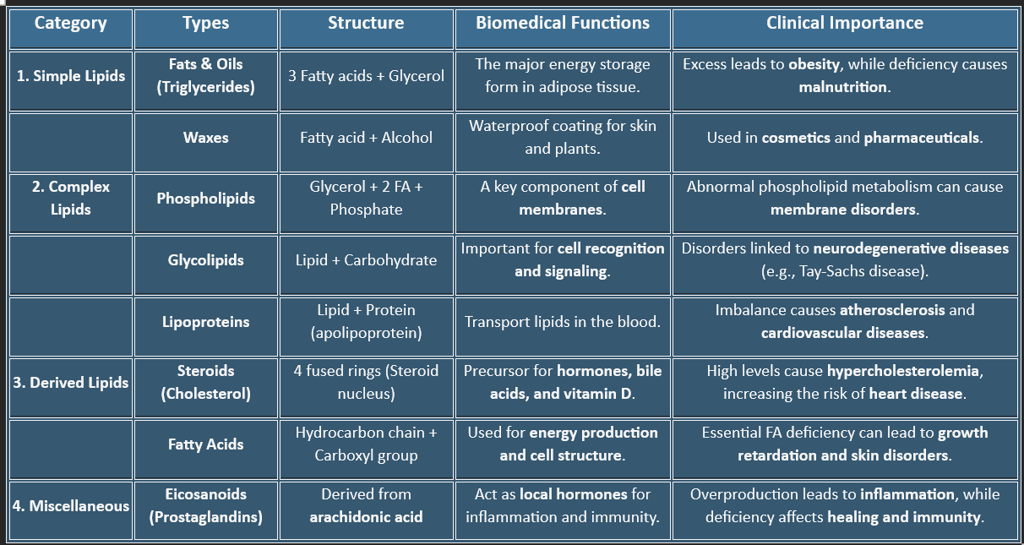
2. Classification of Lipids
3. Biomedical Functions of Lipids
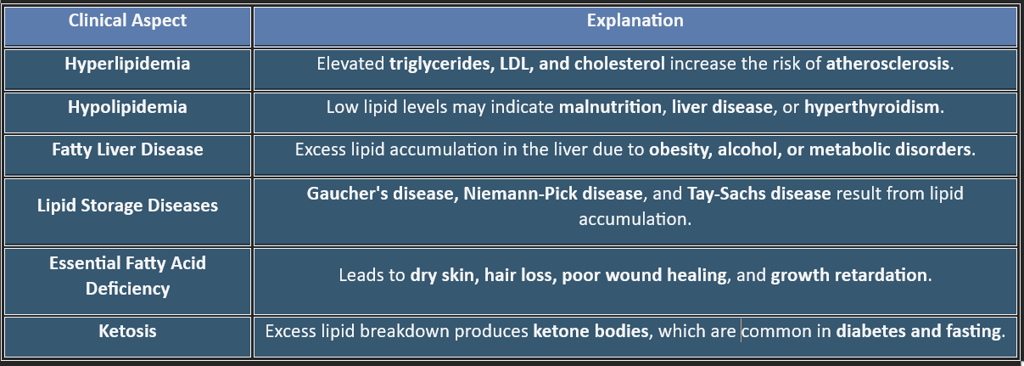
4. Clinical Importance of Lipids
5. Structure of Key Lipids
Key Lipids
Triglycerides: Glycerol backbone + 3 fatty acids.
Phospholipids: Glycerol + 2 fatty acids + phosphate group (amphipathic).
Cholesterol: Steroid ring structure with a hydroxyl group.
Glycolipids: Lipids attached to a carbohydrate, found in cell membranes.
5. Structure of Key Lipids
Key Lipids
Triglycerides: Glycerol backbone + 3 fatty acids.
Phospholipids: Glycerol + 2 fatty acids + phosphate group (amphipathic).
Cholesterol: Steroid ring structure with a hydroxyl group.
Glycolipids: Lipids attached to a carbohydrate, found in cell membranes.
BLOG
Explore the medical biochemistry intricacies.
WRITE TO US
© 2024. All rights reserved.